
PATH
Trace each shape in as few steps as you can.
- Supported devices
- iPhone
- iPad
- Age rating
- To be confirmed
- Genre
- Logic puzzle
- Access
- Coming soon
Small steps. Unexpected possibilities.
Build a sequence of instructions and watch it trace a shape. Start with straight lines and right-angle turns, then discover how a small pattern can describe something much more intricate.
PATH has 156 puzzles across 13 stages. The journey moves from simple drawings to triangular patterns, filled regions, isometric forms, three-dimensional structures and routing challenges. Coming soon to iPhone and iPad.
156 puzzles
A growing collection of shapes and ideas, from an opening square to the final routing challenges.
13 stages of discovery
New tools and geometries change what a few carefully chosen instructions can make.
A better way back
Solve the shape, then revisit your sequence and see how much you can say with fewer steps.
Gameplay
Video could not load. Try again or open the video directly.
Give a shape its instructions
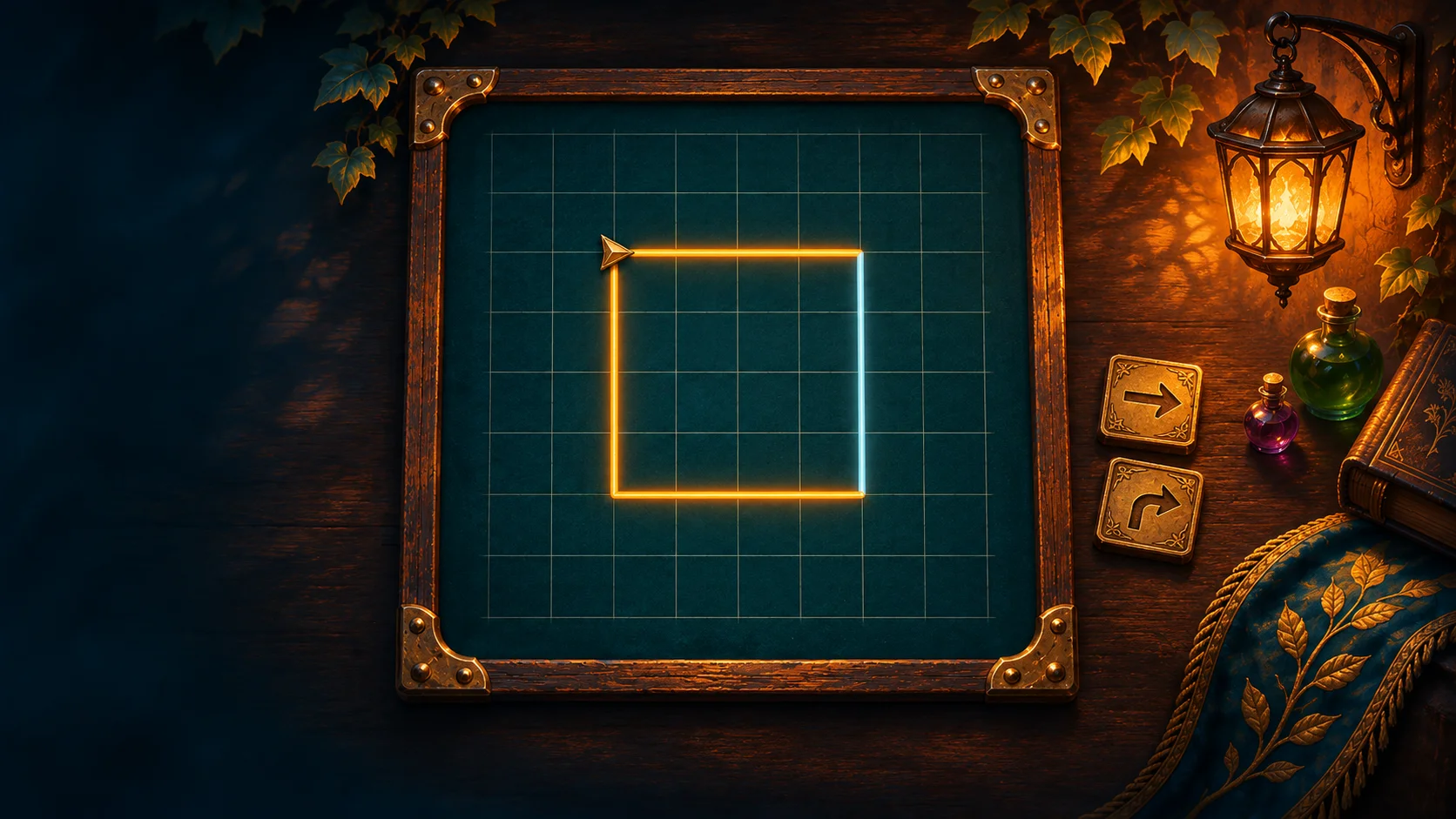
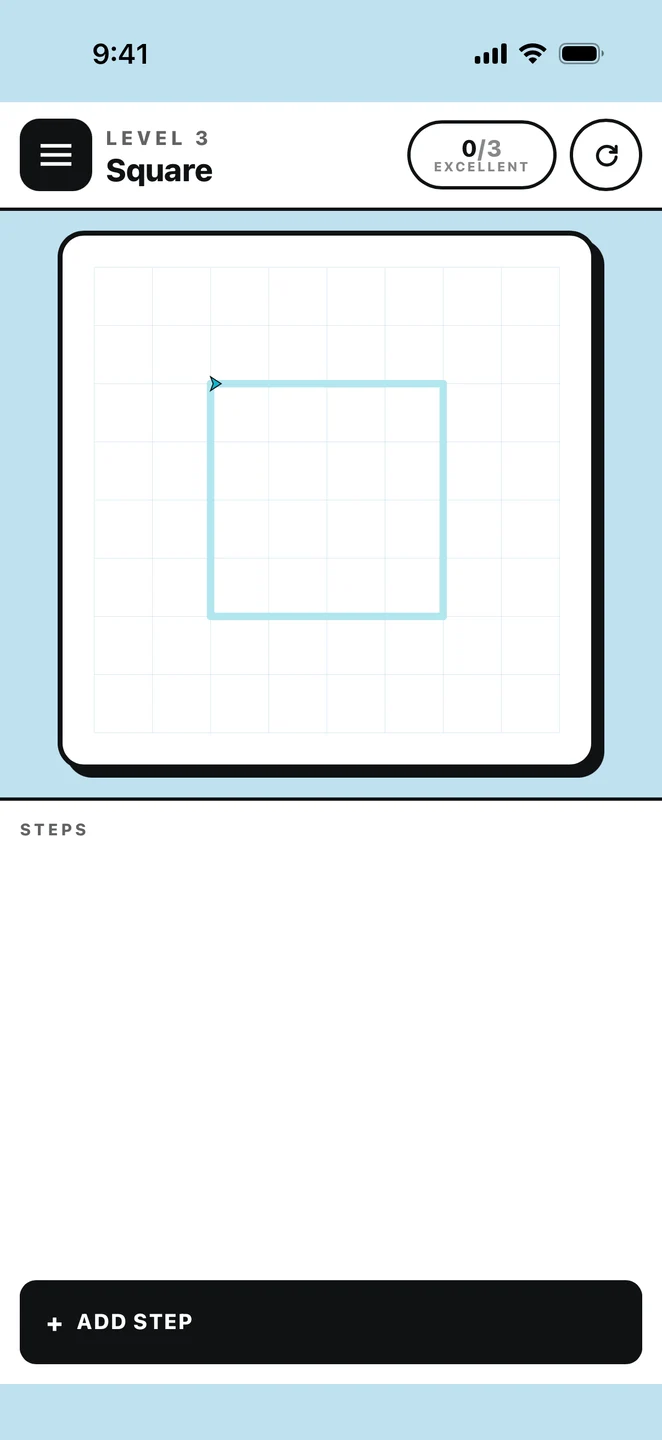
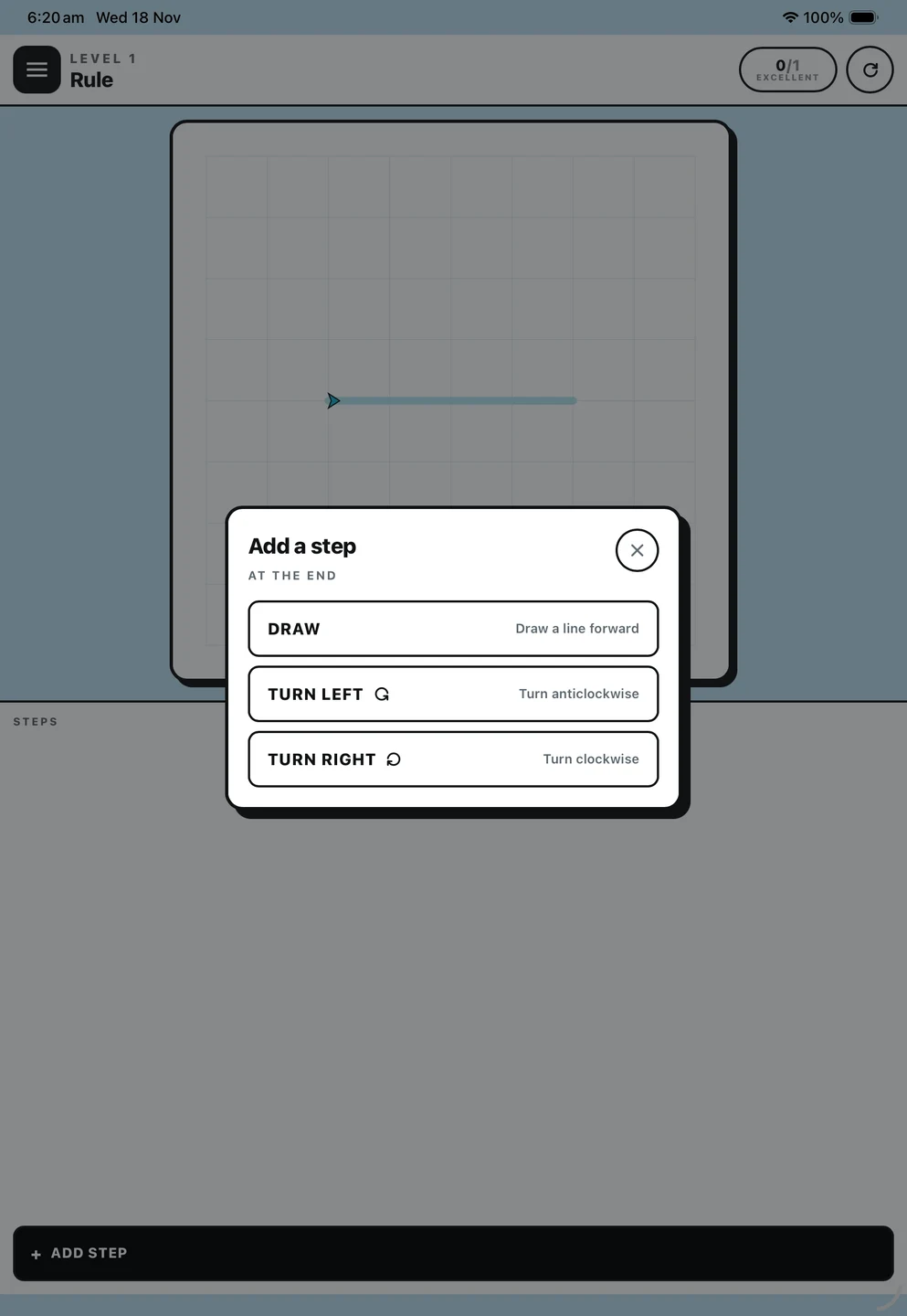
Every puzzle starts with a target, a grid and a starting position. Choose steps to move the pen, draw a line or turn, then run your sequence and see what it makes.
The opening shapes need only a few direct instructions. Soon, repeating a short pattern becomes more useful than writing the same steps again and again. You can adjust the sequence, run it once more and compare the result with the target.
The satisfaction is in making a drawing behave exactly as you intended—and noticing when there is a simpler way to describe it.
A journey beyond the first square
The stages introduce ideas through the figures you make:
- Rule and Count begin with straight lines, turns and repeating patterns whose steps can change from one pass to the next.
- Region, Name, Decide and Self introduce filled areas, reusable figures, decisions and patterns that can call themselves.
- Lattice, Mosaic and Bloom move into six-direction grids, tiling and growing patterns.
- Relief, Frame and Skin explore isometric depth, edges in three-dimensional space and solid faces.
- Route begins with the figure already there. The puzzle becomes choosing the order in which to cover it.
The later stages change more than the size of the drawing. They give you new ways to think about the same few actions.
Solve it. Then make it smaller.
Matching the target is the first success. The next challenge is finding a shorter sequence. PATH’s ratings reward how economically you express the solution, so a completed puzzle can still have something left to discover.
A repeated motif might become one reusable figure. Several nearly identical instructions might become a loop. A shape that looked complicated can suddenly feel simple when you find the pattern inside it.
You do not need to arrive knowing programming terminology. The game introduces its tools through puzzles, with the picture showing what the instructions actually do.
A diagram you can play
A clear grid, a visible target and a moving pen make each step legible. The drawing is both the goal and the feedback: you can see where a turn, repetition or fill changes the result.
From the small screen of an iPhone to the extra space of an iPad, the focus stays on the relationship between the sequence and the shape. Start with a few steps, follow what they make, and keep refining the idea.