
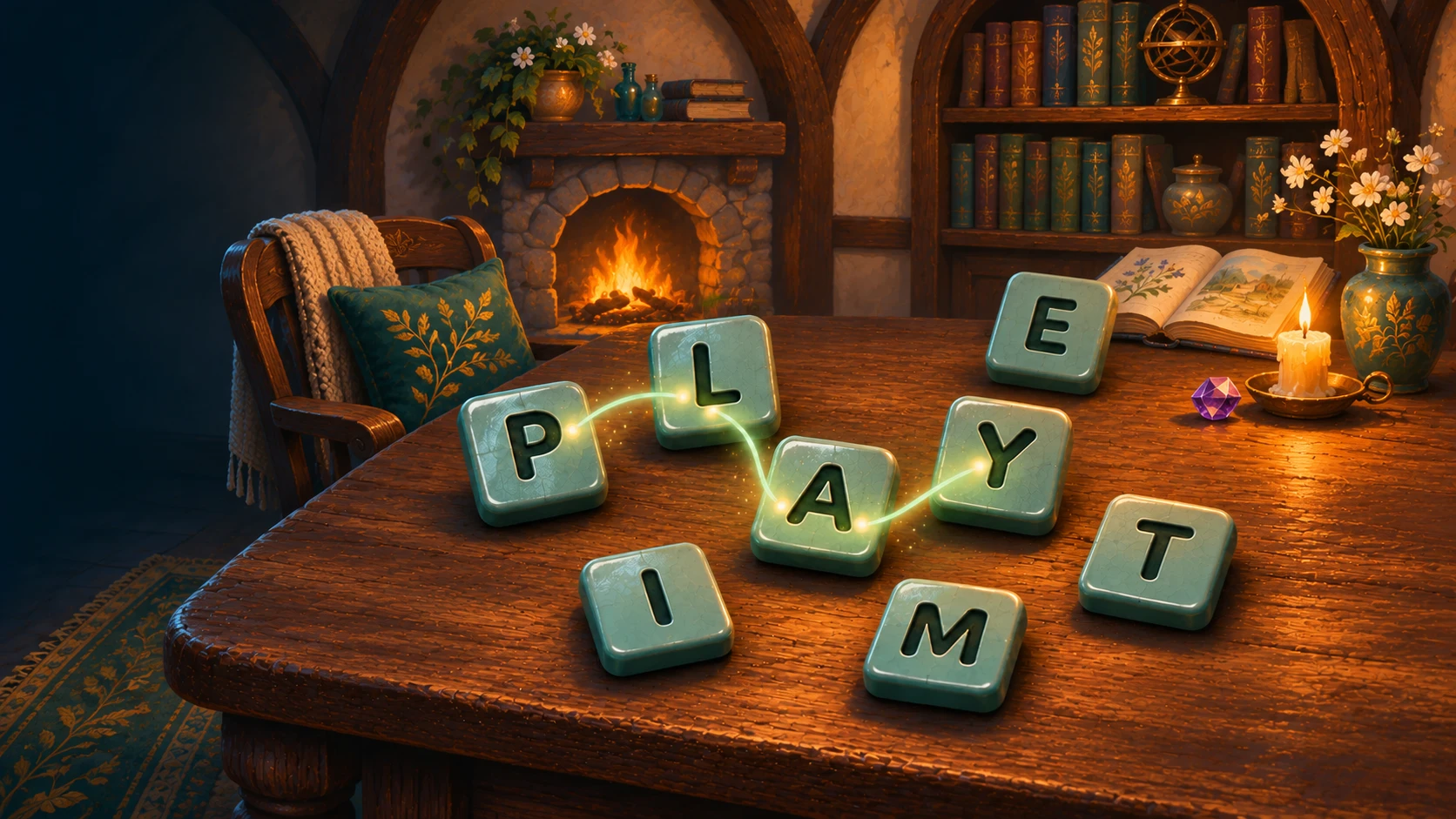
Room to find your own words
Designing Words Daily’s readable tiles, helpful clues and growing challenge for early readers and experienced word hunters.
We wanted Words Daily to welcome someone still building confidence with letters and remain interesting to a player who enjoys hunting for an unfamiliar word. The design decisions concern what to make easy to read, how much to put on the table and where to leave a useful clue.
Large letter faces, a separate place for feedback and a visible path keep the action understandable. Starter offers six tiles, familiar vocabulary and first-letter clues; later levels widen the search and ask more of your vocabulary. The gesture stays familiar while the question grows, so the challenge comes from finding words rather than deciphering the screen.
Make the letter the first thing you read
A tile is an inviting little object: rounded, raised and comfortable sitting among its neighbours. That material character gives the table some warmth. The letter on its face still has the most important job.
Words Daily uses large, dark capitals on the tile faces and keeps the decoration around their edges. The shape of a letter needs to survive a quick glance, a tilted tile and the movement of a finger. A learner should be able to spend their attention recognising a word.
The screen gives different information different places. The word board shows what is still to find. A separate panel carries the word being formed, feedback and meanings. The larger tiles occupy the space beneath it, with room to follow a path between them.
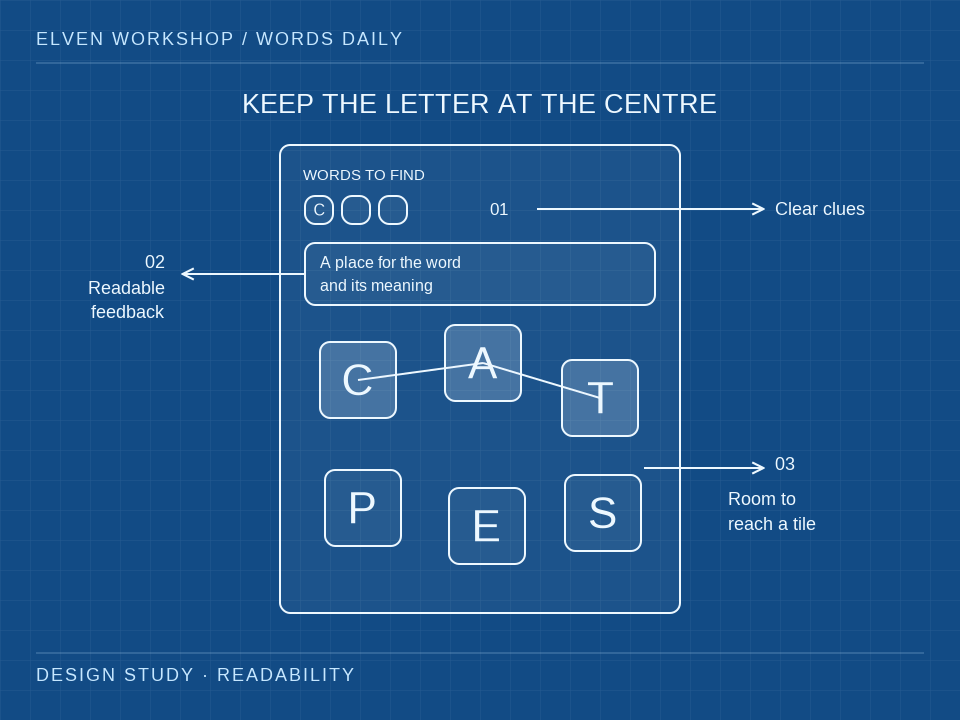
- The cluesWord lengths and revealed letters give the search a starting point.
- The feedbackThe word and its meaning have their own reading space above the hand.
- The tilesLarge letter faces and space between tiles make the next choice visible.
Reduce what needs to be read at once
For an early reader, a little less on the table can make the next decision easier to approach. Starter uses six tiles, shorter words and familiar vocabulary. Each hidden word begins with its first letter showing. There is something concrete to work from.
Easy expands the rack to seven tiles while keeping that first-letter help. Standard, Hard and Expert use eight. The choices concern vocabulary as well as quantity: which words a puzzle may hide, how long they can be and how much help appears before the first move.
These levels are invitations rather than age labels. A young player may enjoy a harder word; an experienced reader may want a gentler puzzle today. The player chooses a level, and suggestions about moving up or down leave the decision with them.
Let skill change the question
An experienced player needs somewhere to take the same gesture. Longer words and less common vocabulary make a familiar collection of letters worth examining again. At Expert, the day’s puzzles reach further into word rarity as they progress.
The visual language holds steady. Letters still sit on tiles, the word board still gives the lengths to look for and the path still describes the word in hand. A player can carry what they learned about the interface into a more demanding search.
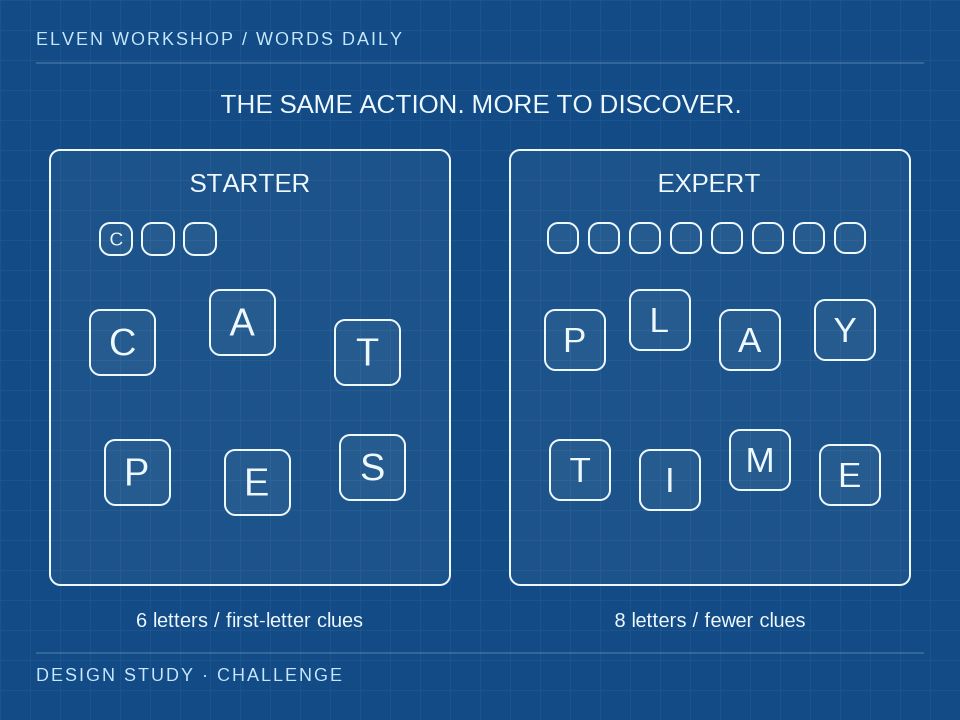
- A useful footholdStarter limits the rack and shows the first letter of each required word.
- A wider questionLater levels add letters, longer words and a broader vocabulary.
- A familiar actionThe same word-building gesture works throughout the levels.
Give people room to act and read
Tracing is an immediate way to describe a word. Moving back over the previous tile takes a letter back, so adjusting a choice is part of the gesture. The selected letters also form a visible path, giving feedback beyond a change of colour.
The native interface names each tile by its letter and exposes a Submit word action to assistive technology. Tile selection can also build a word one letter at a time. Those routes matter when following a continuous drag is less comfortable than making separate choices.
Text responds to the system’s text-size setting, with different limits for reading panels and the puzzle area so the tiles keep their room. Increase Contrast strengthens quieter text and outlines, while Reduce Motion limits decorative movement. Legibility remains a design task across the different screens and settings, rather than something a material finish can solve by itself.
Let finding a word be the beginning
A successful word brings a short meaning with it. That gives an unfamiliar find some context and makes a familiar word worth thinking about again. The meaning has a reading space of its own, away from the gesture that found it.
Found words join a personal word bank. Review rounds ask for a word through its meaning and return it at longer intervals as it is remembered. The aim is to keep a discovery available after the board has moved on, without turning every puzzle into a lesson or promising a particular learning outcome.
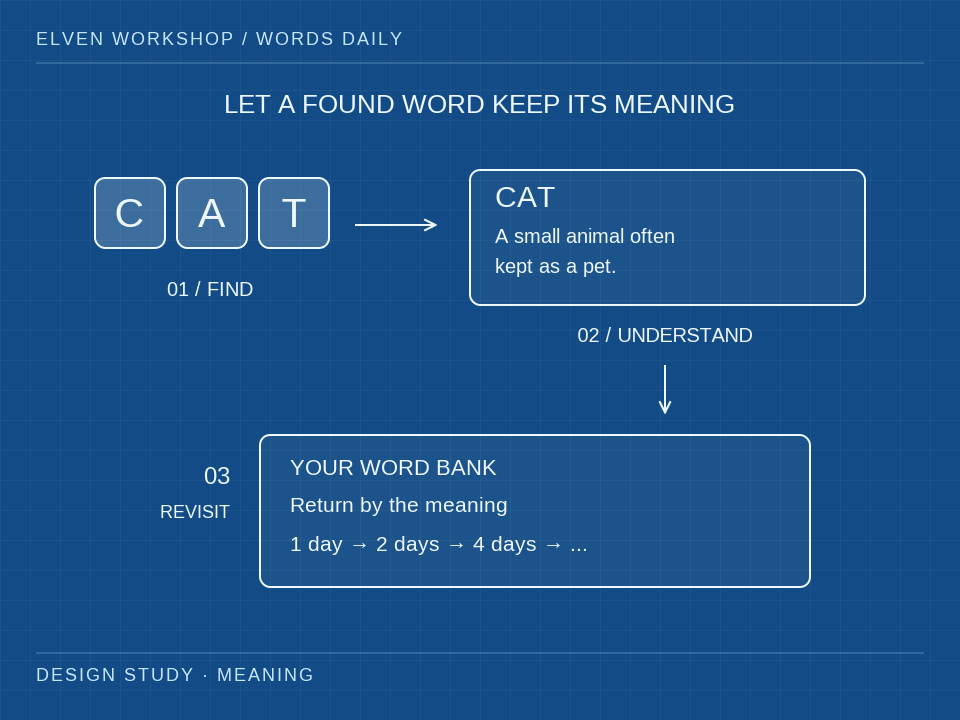
- FindThe word is built with the same visible letters and path.
- UnderstandA short definition gives the discovery some context.
- RevisitThe word bank keeps it available for a later review by meaning.
Leave room for a different pace
The ordinary daily puzzles give players time to think. A 60-second bonus round is a separate, optional challenge after the daily set. Practice offers free hints and the choice to skip a puzzle, while catch-up keeps the last seven days within reach.
That range of pace belongs to the same idea as the levels and the readable tiles: let someone find a way into the game, then leave them somewhere to go. The screen should make the next choice clear whether the satisfying discovery is a first short word or a word the player has never met before.