
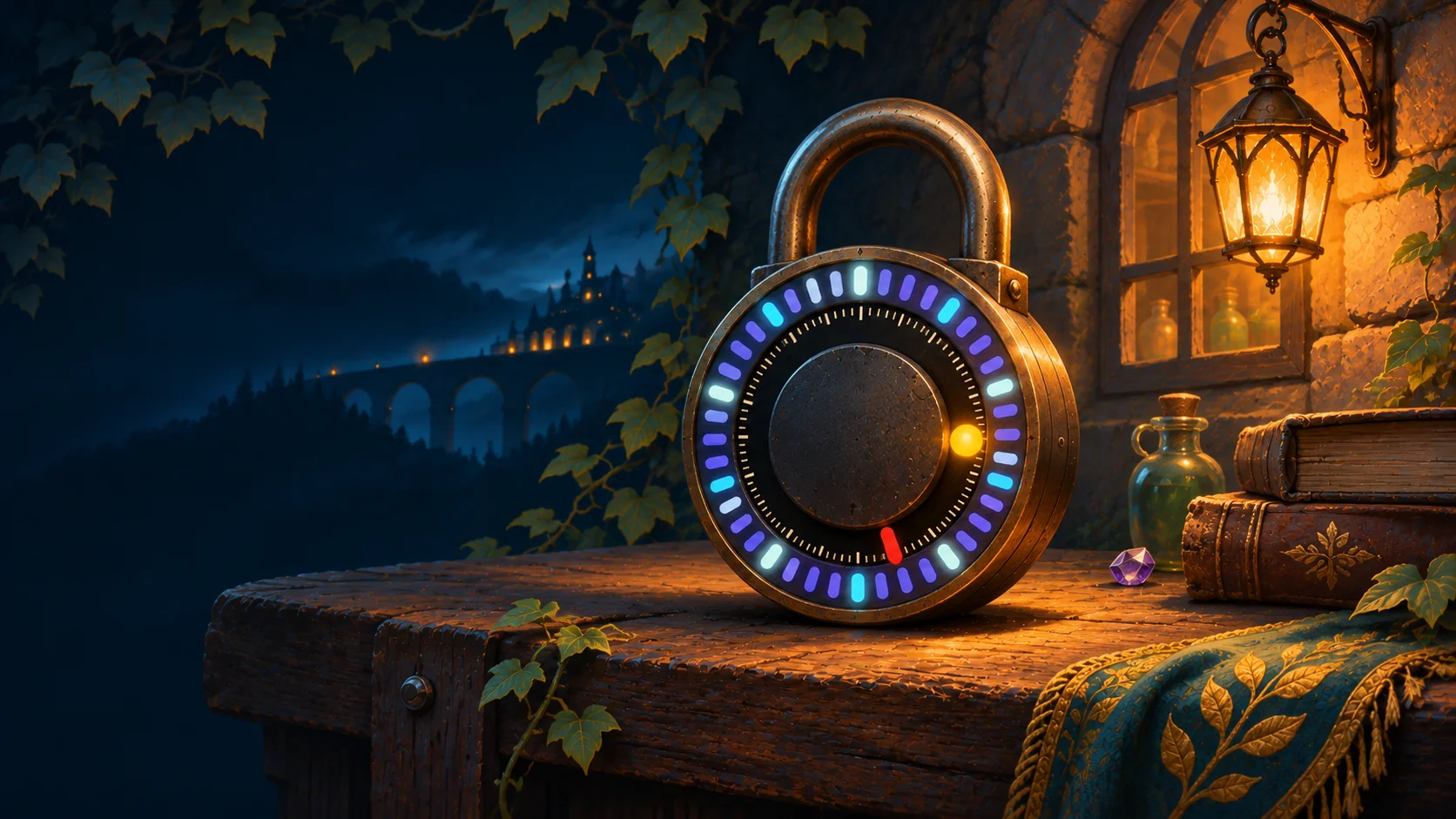
One ring. One moment.
How a moving needle, a waiting target and a handful of keyholes became the heart of Lock Pick.
We wanted Lock Pick’s first ring to explain itself at a glance: watch a needle meet a target, then tap. The design question was how to keep that moment clear while also showing progress, score and remaining lives.
We gave the needle and target different shapes, put the remaining-match count in the centre and moved score and life icons away from the timing track. Early and late messages explain a miss, dimmed keyholes show lost lives and a distinct chime marks a life earned. Each response should help you understand the tap while leaving room to watch the next one.
Give your eye somewhere to go
A ring gives the needle a continuous journey. You can follow its movement, judge the gap ahead and begin to anticipate the meeting. The target stays on that same track. Your eye has one place to work.
The two need different silhouettes. The needle is a short radial mark; the target is a round spot. In the finished game, the red needle and yellow target add another distinction. Their shapes carry the difference into these blue-and-white studies.
The tap is deliberately generous about where your finger lands. You are timing a meeting on the ring, rather than trying to touch a tiny moving object. That leaves the interesting difficulty in the moment itself.
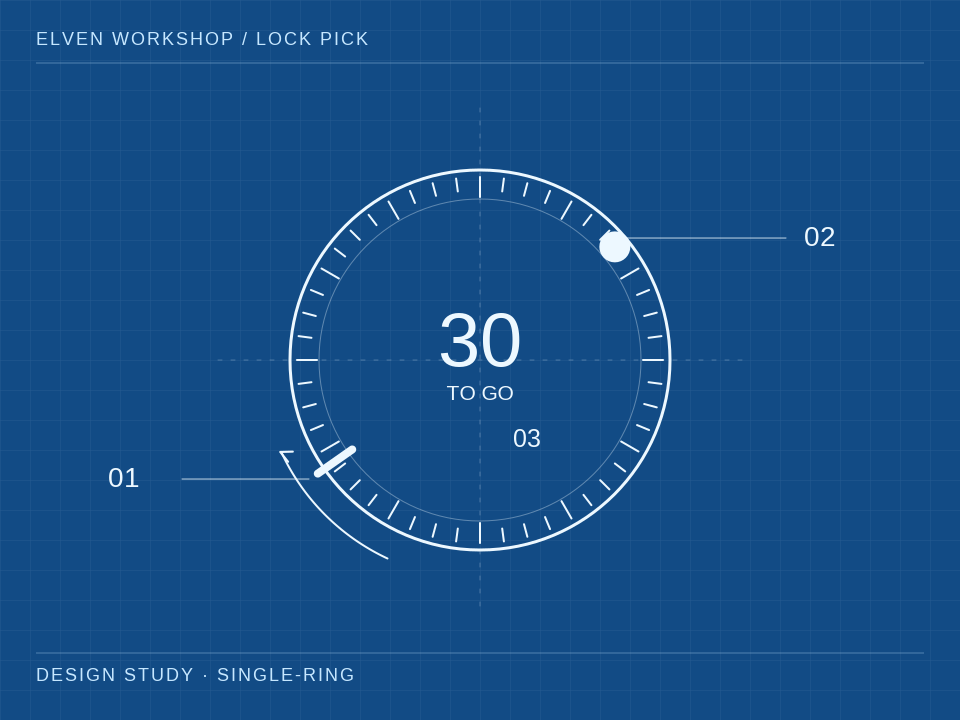
- The needleA moving line gives the moment a direction. Red in the finished game.
- The targetA round spot marks the meeting point. Yellow in the finished game.
- The remaining matchesThe centre answers a different question: how much further to the unlock?
Let the circle breathe
There is more to a run than the next match. You have a score, a stage, lives and a streak to care about. But each of those competes for a little of the attention the needle needs.
Our layout gives the immediate objective the centre of the dial: the number of matches still to go. The score lives outside it. Life icons and controls sit away from the timing track. You can check them between moments, then return to the ring.
The lock gives that counter a destination. Thirty successful matches are working towards an unlock, a visible end to the stage. The mechanical idea and the circular playfield belong together: something turning, something catching, something finally giving way.
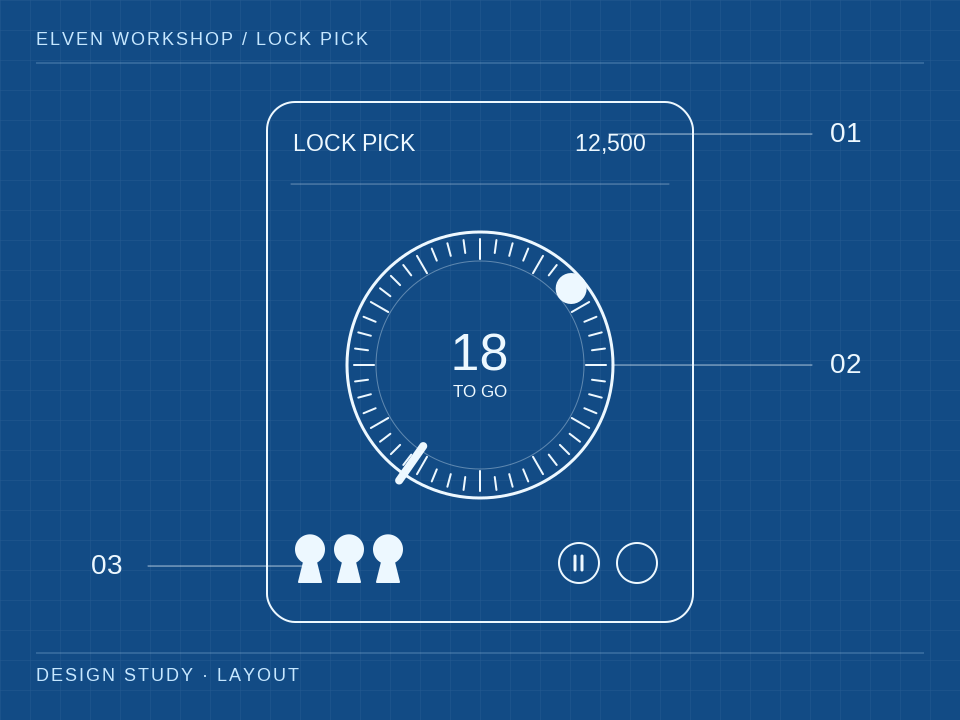
- Score aboveA place to check your run without filling the timing track with numbers.
- Timing in the middleThe next meeting gets the largest, clearest part of the screen.
- Lives belowThe keyholes stay visible without becoming extra targets to watch.
Make a mistake useful
A miss needs to tell you more than “no”. Lock Pick distinguishes an early tap from a late one. That small piece of language gives you something to adjust on the next attempt.
The life display makes the consequence visible. Its keyhole symbols belong to the same world as the lock. Lose a life and one of those symbols dims; the place it occupied remains readable. A brief miss treatment around the dial reinforces what happened.
An extra life deserves its own little moment. The new keyhole blinks into view, and an ascending chime makes the gain feel different from an ordinary match. You have earned more room to keep the run going.
These signals work together. The words explain the timing, the keyholes explain the remaining chances, and the sound gives each event its character. The next target still needs your attention.
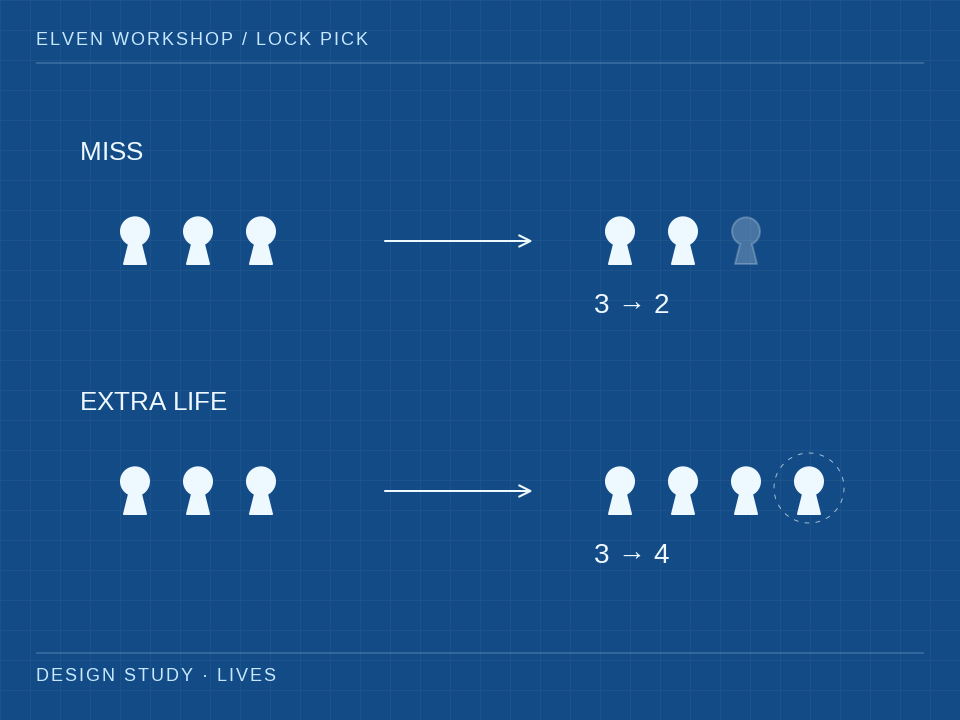
- A life lostA dimmed keyhole leaves a visible trace of the chance you used.
- A life earnedThe arriving keyhole and rising chime give the reward a distinct identity.
Leave room for another idea
Once that one-ring conversation is clear, there is somewhere to build. A second ring can move your attention. Several live targets can change how you choose the next moment. The tap can stay familiar while the question around it grows.
That is the thread running through Lock Pick: keep the action small enough to understand, then find more to ask of it. The rest of this Workshop story follows that thread through timing, visual character, arcade sound and the multi-ring game.