
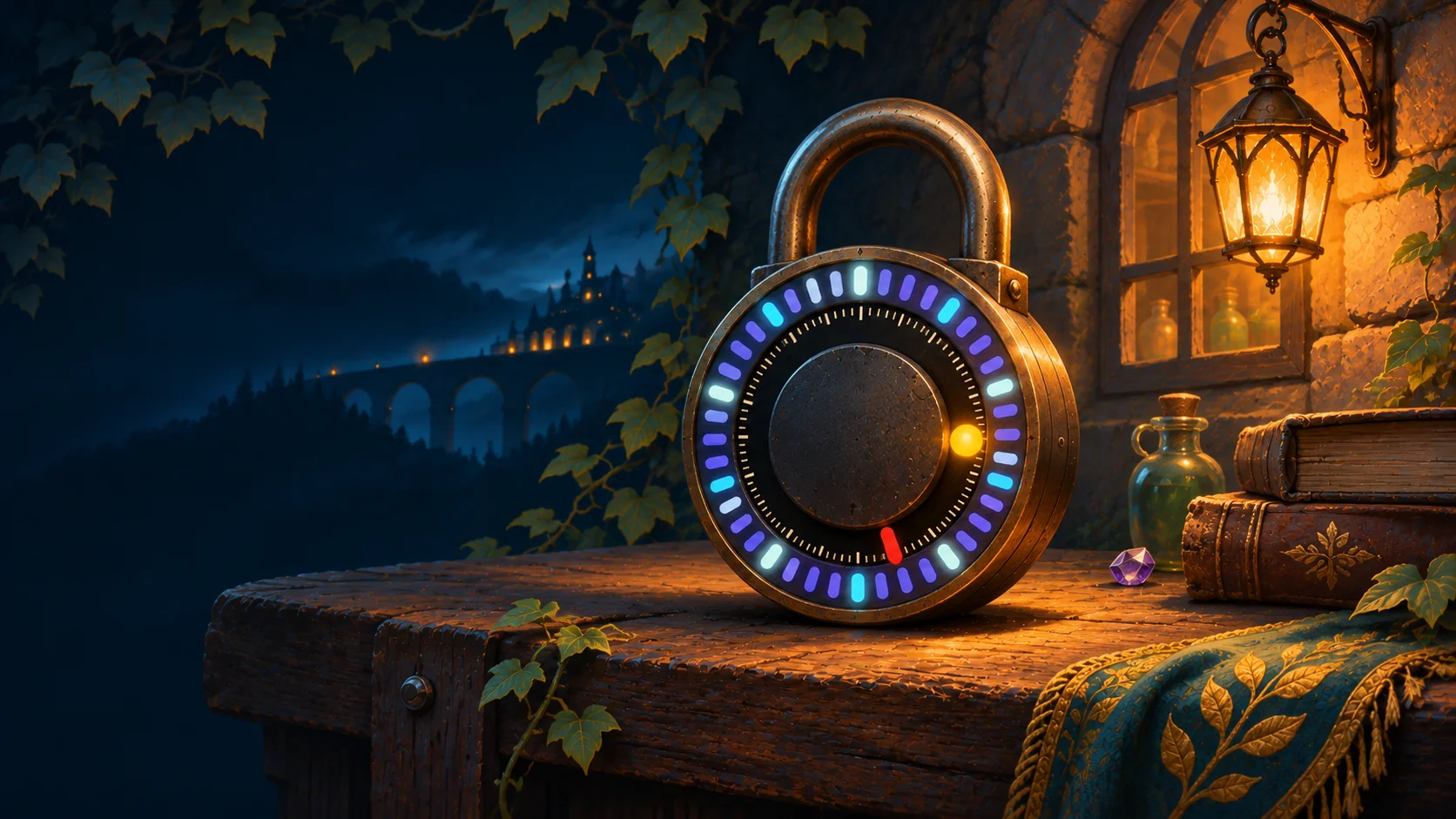
More rings. More to read.
How a familiar tap becomes a new challenge when attention moves between rings—and several targets stay live at once.
We wanted more variation from Lock Pick’s single timing action without adding a new control for every ring. The design choices were about attention: how clearly separate lanes read, how targets move attention between tracks and what changes when several targets remain live together.
Ordinary multi-ring modes keep one target active and move the next meeting between tracks. Concurrent modes give each ring its own needle and target, with neighbouring needles moving in opposite directions and one shared tap able to catch overlapping windows. Keeping shapes, life feedback and the input familiar lets each mode ask more of your attention without requiring you to relearn the basic action.
Move the attention first
Adding another track creates somewhere else for the next target to appear. You still watch a needle approach a spot, but you also need to notice which ring now matters.
That makes spacing part of the play. A target has to belong visibly to its lane. The rings need enough separation for the eye to read them as different tracks, with the central counter continuing to hold the stage objective.
A change of ring also changes the direction of travel. There is a small reset in your attention: find the track, read the direction, judge the moment. The familiar tap now follows a fresh little act of reading.
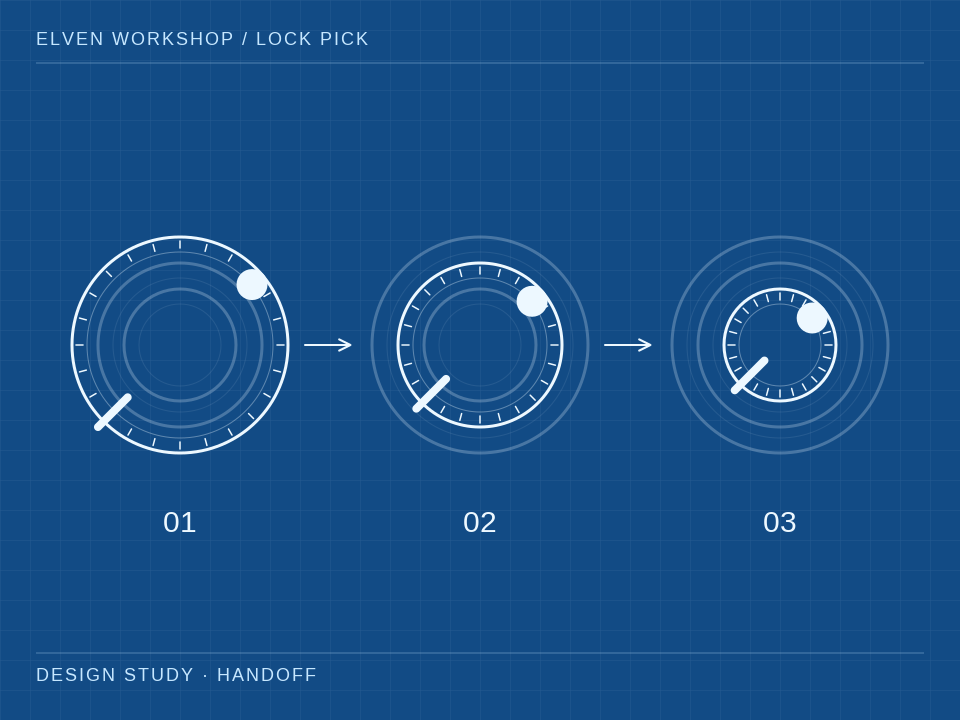
- Find the live ringOnly one target is active in the ordinary multi-ring modes.
- Read the movementA ring change reverses direction, asking you to look again.
- Keep the familiar actionThe same timing tap works on every ring.
Change the question with concurrent play
Concurrent rings do something more interesting than adding another place for the next target. Each ring has its own needle and target. Several meetings are approaching at the same time.
Your attention has to spread. You can watch the gap on one track while keeping another in the corner of your eye. Neighbouring rings turn in opposite directions, so their movements remain distinct.
Matching one target leaves the others in play. When target windows overlap, a single well-timed tap can register more than one match. That creates a pleasing possibility: one small action, several things coming together.
The input remains shared. You are not selecting a ring with your finger or adding a new button for each lane. The challenge is reading the approaching moments and choosing when to act.
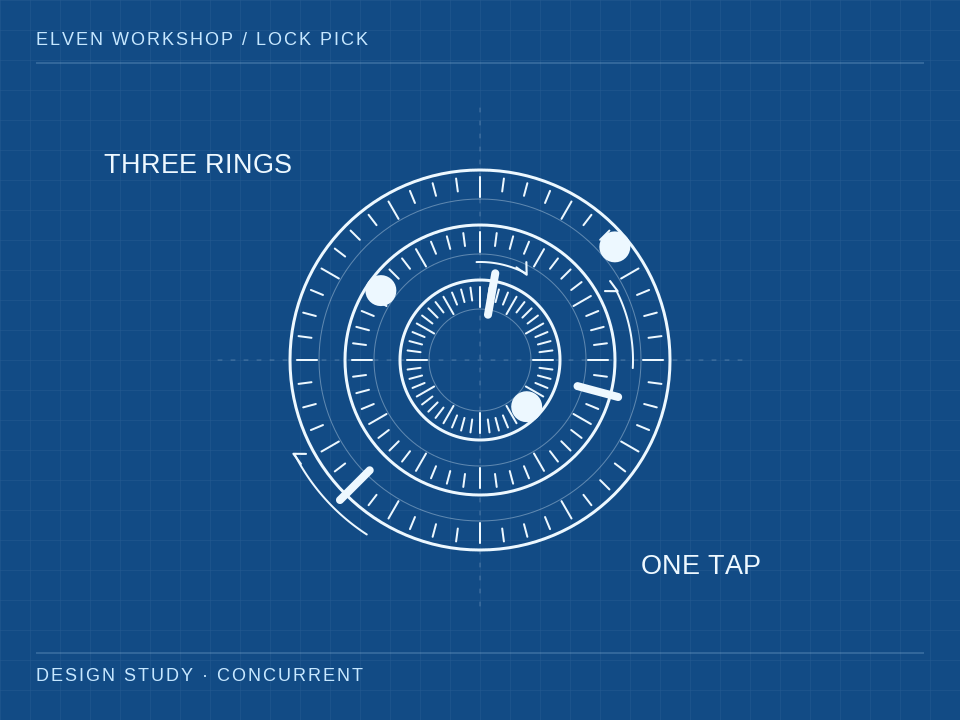
- More than one live targetYou have several approaching meetings to keep track of.
- Separate movementNeighbouring needles travel in opposite directions.
- A shared inputA tap can catch multiple targets when their timing windows overlap.
Keep the things you already understand
With more to watch, the visual grammar becomes more important. The needle is still a line. The target is still a spot. The number in the centre still tells you how many matches remain before the lock opens.
The life display and feedback language continue to do the same jobs too. Learning another mode should build on your understanding of the first ring. It should give that understanding a new use.
That is also why adding rings deserves more thought than simply drawing another circle. Each lane changes the space available to the others. Needles and targets have to remain readable as those lanes become narrower. The arrangement is part of the difficulty you feel.
Give mastery somewhere to go
The modes form a progression: Single Ring, 2 Rings, 3 Rings, then the concurrent variations. You meet the basic timing idea first, follow it between tracks, and eventually learn to hold several approaching moments in view.
Each step keeps something you know and asks something new of your attention. That is the variation we wanted from a game built around such a compact action.
The first ring teaches you to watch for a meeting. The later ones let you discover how many of those little moments you can read at once.